Free Pokémon dual type weakness calculator: pick one or two defending types and instantly see every 4×, 2×, ½×, ¼× and immune matchup — plus a full team weakness calculator with STAB coverage gaps. Complete gen 6+ chart.
Quick answer
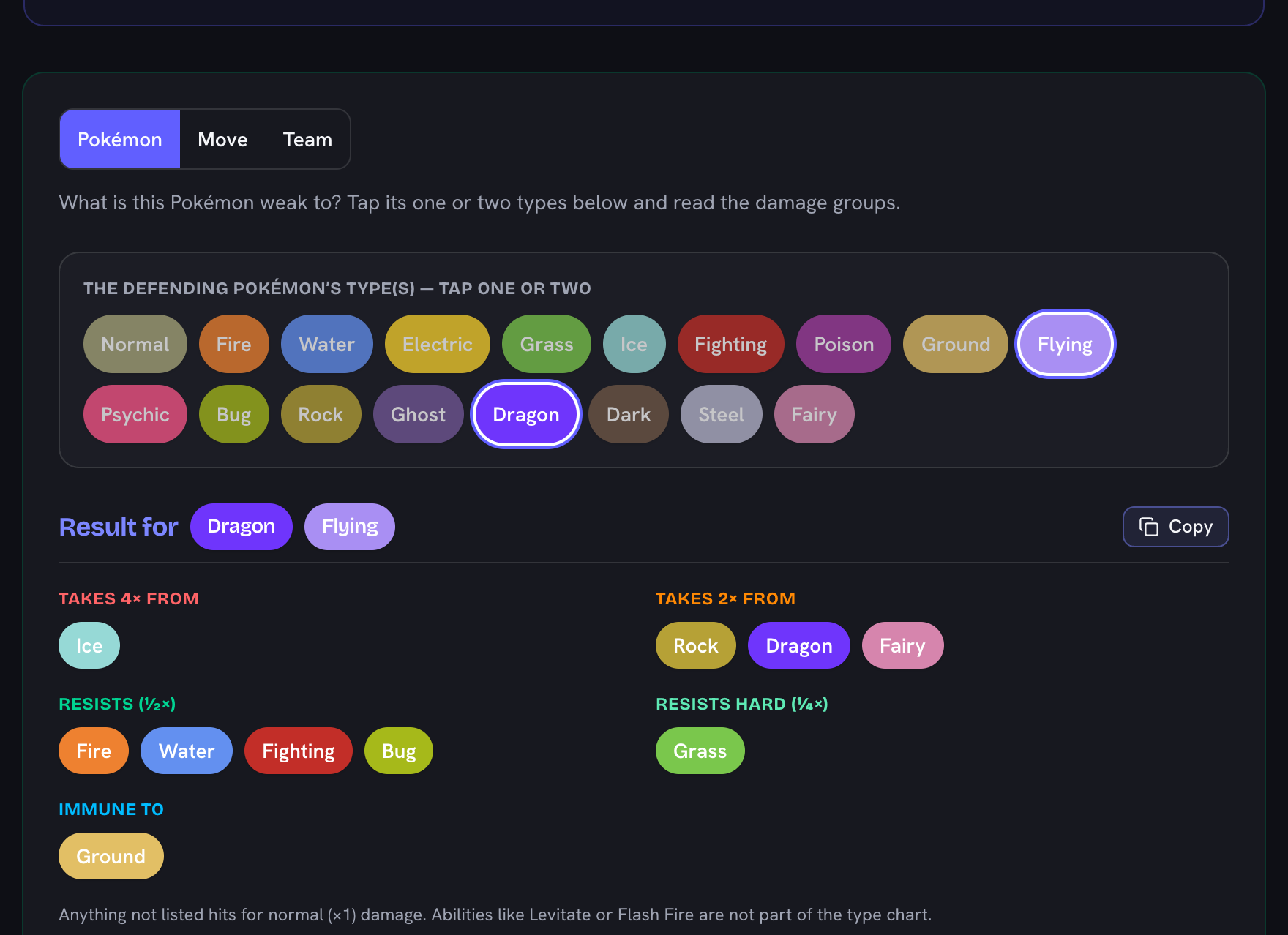
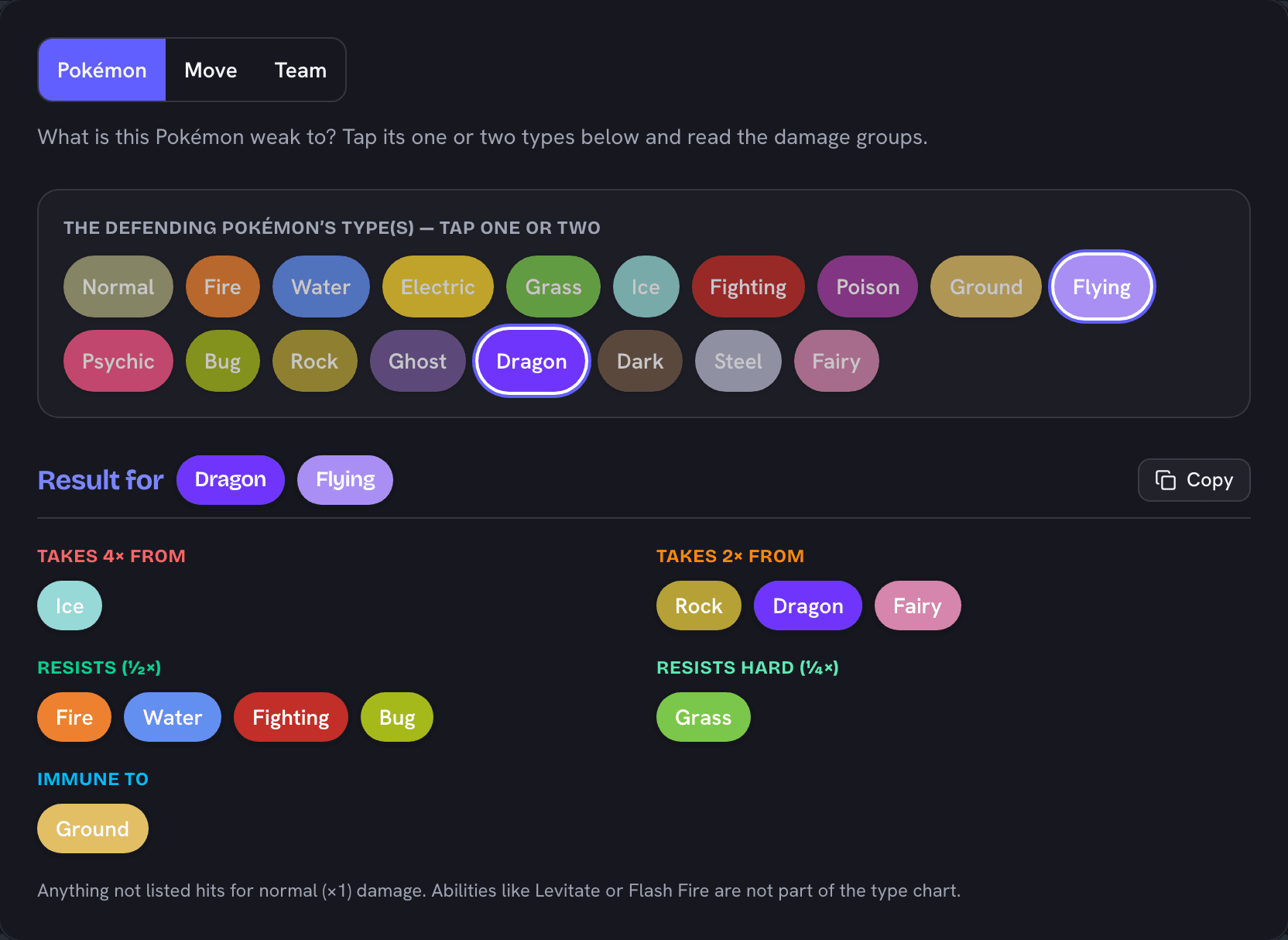
A Pokémon’s weaknesses come from multiplying its two types’ effectiveness together. Ice is 2× against both Dragon and Flying, so a Dragon/Flying Pokémon takes 4× from Ice; two resists compound to ¼×, and a single immunity (×0) zeroes the whole line. Pick one or two defending types and the calculator sorts every attacking type into its true bucket: 4×, 2×, neutral, ½×, ¼× or immune (gen 6+, all 18 types).
Find any Pokémon’s weaknesses, resistances, and immunities in three steps: single-type or dual-type, straight from the full gen 6+ chart.
1
Pick your Pokémon’s type
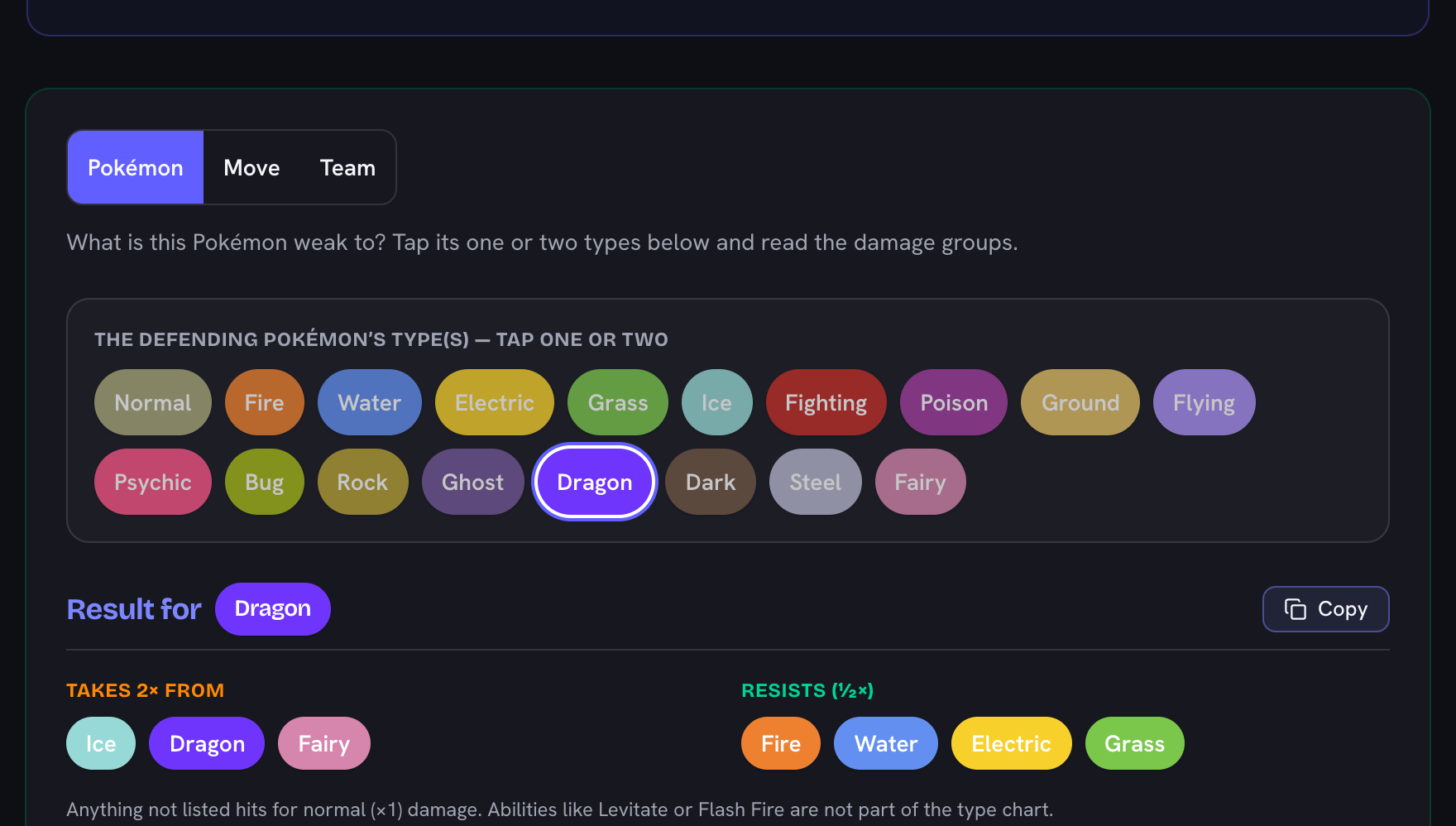
Tap the defending type and the calculator instantly lists every type that hits it super-effectively (×2), everything it resists (×½), and anything it is immune to (×0), computed live from the complete gen 6+ chart, no squinting at a static grid.
2
Stack a second type for dual types
Tap another type and the multipliers combine exactly the way the games do (a ×4 double weakness or a ×¼ double resistance), so you can plan around real dual-type Pokémon, not just single types.
3
Or check a move or a whole team
Flip the mode toggle to score an attacking move’s coverage, or switch to Team mode to find the weaknesses a whole squad shares. Same instant, chart-accurate math.
Why a Calculator Beats a Static Type Chart
The classic 18×18 type chart answers one question at a time, and almost every Pokémon that matters is dual-typed, which the wall chart makes you compute in your head. This Pokémon weakness calculator does the multiplication for you: pick the one or two defending types and every attacking type lands in its true bucket: 4×, 2×, neutral, ½×, ¼× or immune. Flip to attacking mode when you’re choosing a move instead of switching a defender.
The math is the part charts hide. Each defending type contributes its own multiplier and they stack by multiplication, so two weaknesses compound into 4×, two resists shrink to ¼×, and a single immunity zeroes the whole line no matter what the other type does. That last rule is the one that wins games: Water/Ground doesn’t just resist Electric, it ignores it entirely.
Pokémon Team Weakness Calculator: the Whole Squad at Once
The Team check mode is a full Pokémon team weakness calculator, the part most type charts can’t do at all: enter up to six members and it cross-references every attacking type against the whole squad. The number that matters is the uncovered threat: a type at least one teammate folds to while nobody on the team resists it. Three teammates sharing a Ground weakness with no Flying or Levitate answer is how sweeps happen; this view catches it before your opponent does. Classic fixes live in the type math itself: a Water/Ground member erases an Electric threat outright, and a Steel type blanket-answers eleven attacking types at once.
Defense is only half the audit, so team mode also computes your offensive STAB coverage: treating each member’s own types as its attacking types, it counts who can hit every defending type super-effectively, and flags the types nobody on the squad answers. A team that can’t touch Steel or Dragon knows exactly which coverage move to teach next.
Classic team cores, audited by the calculator
Core (canonical typings)
Uncovered threats (defense)
No super-effective STAB against (offense)
Kanto starters (Charizard, Blastoise, Venusaur)
Flying, Psychic, Rock
Normal, Electric, Poison, Flying, Psychic, Ghost, Dragon, Dark
Normal, Fighting, Flying, Psychic, Ghost, Dragon, Dark
Both columns are computed by the same team engine the calculator runs: a threat is uncovered when someone is weak to it and nobody resists or is immune; an offense gap is a type no member's own types hit super-effectively.
Every Single-Type Matchup, Computed
This table is generated from the same effectiveness data the calculator runs on: 51 super-effective, 61 resisted and 8 immune matchups, the complete gen 6+ chart (unchanged since X & Y added Fairy). Use it for quick single-type lookups; use the calculator above the moment a second type is involved.
Defensive matchups by type (gen 6+)
Defending type
Weak to (×2)
Resists (×½)
Immune (×0)
Normal
Fighting
none
Ghost
Fire
Water, Ground, Rock
Fire, Grass, Ice, Bug, Steel, Fairy
none
Water
Electric, Grass
Fire, Water, Ice, Steel
none
Electric
Ground
Electric, Flying, Steel
none
Grass
Fire, Ice, Poison, Flying, Bug
Water, Electric, Grass, Ground
none
Ice
Fire, Fighting, Rock, Steel
Ice
none
Fighting
Flying, Psychic, Fairy
Bug, Rock, Dark
none
Poison
Ground, Psychic
Grass, Fighting, Poison, Bug, Fairy
none
Ground
Water, Grass, Ice
Poison, Rock
Electric
Flying
Electric, Ice, Rock
Grass, Fighting, Bug
Ground
Psychic
Bug, Ghost, Dark
Fighting, Psychic
none
Bug
Fire, Flying, Rock
Grass, Fighting, Ground
none
Rock
Water, Grass, Fighting, Ground, Steel
Normal, Fire, Poison, Flying
none
Ghost
Ghost, Dark
Poison, Bug
Normal, Fighting
Dragon
Ice, Dragon, Fairy
Fire, Water, Electric, Grass
none
Dark
Fighting, Bug, Fairy
Ghost, Dark
Psychic
Steel
Fire, Fighting, Ground
Normal, Grass, Ice, Flying, Psychic, Bug, Rock, Dragon, Steel, Fairy
Poison
Fairy
Poison, Steel
Fighting, Bug, Dark
Dragon
Computed from the calculator's own type chart: dual types multiply these values together.
Dual-Type Weakness Chart
A static single-type chart can’t show what actually happens when two types stack, so here is a dual-type weakness chart of the most famous pairings, every column computed by the same engine as the calculator. The 4× column is where games are decided: it appears only when both types share a weakness (Ice hits Dragon and Flying, so Dragon/Flying folds to it at 4×), and a single immunity in the ×0 column wipes a whole attacking type off the board no matter what the partner type does. Want a combination that isn’t listed? Tap the two types in the calculator above and it computes the full spread instantly.
Common dual-type weakness chart
Dual type
Weak ×4
Weak ×2
Immune (×0)
Dragon/Flying
Ice
Rock, Dragon, Fairy
Ground
Water/Ground
Grass
none
Electric
Water/Flying
Electric
Rock
Ground
Bug/Steel
Fire
none
Poison
Grass/Ice
Fire
Fighting, Poison, Flying, Bug, Rock, Steel
none
Rock/Ground
Water, Grass
Ice, Fighting, Ground, Steel
Electric
Ice/Flying
Rock
Fire, Electric, Steel
Ground
Fire/Rock
Water, Ground
Fighting, Rock
none
Grass/Poison
none
Fire, Ice, Flying, Psychic
none
Steel/Fairy
none
Fire, Ground
Poison, Dragon
Ghost/Dark
none
Fairy
Normal, Fighting, Psychic
Normal/Flying
none
Electric, Ice, Rock
Ground, Ghost
Each pairing's two single-type multipliers are multiplied together by the calculator's own effectiveness function: a 4× needs both types weak to the same attack; a ×0 immunity zeroes the whole line.
Dual Types With the Fewest Weaknesses
A type chart answers one typing at a time; this section scores the whole space at once. Every single type and every pair of two different types (18 single types and 153 pairs, 171 typings in all) is scored by the same matchup math the calculator above renders from. A weakness here is any attacking type landing above 1×, and the 4× cases get their own column, because one type hitting for 4× is a different problem from two hitting for 2×.
No typing gets below 1 weakness. That floor is reached by 7 of them, 5 dual, and the table below sorts them by what they bounce off, the only thing separating typings that tie on weakness count. Bug/Steel wins it, resisting or ignoring 9 of the 18 attacking types. Read the ×4 column before you build around any of them, though: some pay for the short list with a double weakness (Bug/Steel at 4× to Fire and Water/Ground at 4× to Grass), and one attacking type at quadruple damage still ends a Pokémon in a single hit.
Type combinations with the fewest weaknesses
Typing
Weak ×2
Weak ×4
Resists + immunities (of 18)
Bug/Steel
none
Fire
9
Normal/Ghost
Dark
none
5
Water/Ground
none
Grass
5
Poison/Dark
Ground
none
5
Ghost/Dark
Fairy
none
4
Electric
Ground
none
3
Normal
Fighting
none
1
All 171 typings (18 single types and 153 pairs) scored through the same matchup math the calculator runs on. A weakness is any attacking type landing above 1×; the last column counts the ones landing at ½×, ¼× or 0×. Ties are published whole, so a table stops at a tier boundary rather than halfway through one.
The Type Combinations With the Most Weaknesses
Same ranking, other end: 6 typings take super-effective damage from 7 of the 18 attacking types, which is as bad as it gets, and this table sorts them by how little they resist. Grass/Ice is the worst of them: 7 weaknesses, one of them Fire at 4×, and only 4 attacking types it resists or ignores.
The same types keep turning up: Grass and Rock each appear in 3 of the 6 worst-tier typings. A second type only helps when it covers what the first one folds to, and these rows are what happens when it doesn’t: the pairing inherits both weakness lists and cancels almost nothing.
None of this counts stats, abilities, or the moves a Pokémon actually carries; Levitate or Water Absorb rewrites a row on its own. It is the type layer only.
All 171 typings (18 single types and 153 pairs) scored through the same matchup math the calculator runs on. A weakness is any attacking type landing above 1×; the last column counts the ones landing at ½×, ¼× or 0×. Ties are published whole, so a table stops at a tier boundary rather than halfway through one.
Weaknesses of Popular Pokémon
Most people arrive with a specific Pokémon in mind rather than a type pair, so here are the full defensive spreads for the well-known Pokémon used as examples on this page — each one computed by the same engine as the calculator, from its canonical typing. Charizard is the classic lesson: Fire resists Fire and Flying resists Fighting, but both are weak to Rock, so a Rock move lands at 4× — which is why a Stealth Rock on the field takes half its health the moment it switches in. Garchomp shows the other side: Ground’s immunity to Electric survives the pairing intact, so Dragon/Ground takes nothing at all from Thunderbolt.
Any Pokémon not listed works the same way — tap its two types in the calculator above and it computes the identical spread instantly, including the ½× and ¼× resists this table leaves out for width.
Popular Pokémon weakness chart
Pokémon (typing)
Weak ×4
Weak ×2
Immune (×0)
Charizard (Fire/Flying)
Rock
Water, Electric
Ground
Blastoise (Water)
none
Electric, Grass
none
Venusaur (Grass/Poison)
none
Fire, Ice, Flying, Psychic
none
Garchomp (Dragon/Ground)
Ice
Dragon, Fairy
Electric
Clefable (Fairy)
none
Poison, Steel
Dragon
Skarmory (Steel/Flying)
none
Fire, Electric
Poison, Ground
Tyranitar (Rock/Dark)
Fighting
Water, Grass, Ground, Bug, Steel, Fairy
Psychic
Excadrill (Ground/Steel)
none
Fire, Water, Fighting, Ground
Electric, Poison
Gliscor (Ground/Flying)
Ice
Water
Electric, Ground
Dragonite (Dragon/Flying)
Ice
Rock, Dragon, Fairy
Ground
Metagross (Steel/Psychic)
none
Fire, Ground, Ghost, Dark
Poison
Swampert (Water/Ground)
Grass
none
Electric
Ferrothorn (Grass/Steel)
Fire
Fighting
Poison
Heatran (Fire/Steel)
Ground
Water, Fighting
Poison
Canonical typings, run through the calculator's own matchup math — never hand-typed. Abilities (Levitate, Flash Fire, Water Absorb) are a separate layer the games apply on top of these type values.
Full Pokémon Type Chart (All 18 Types)
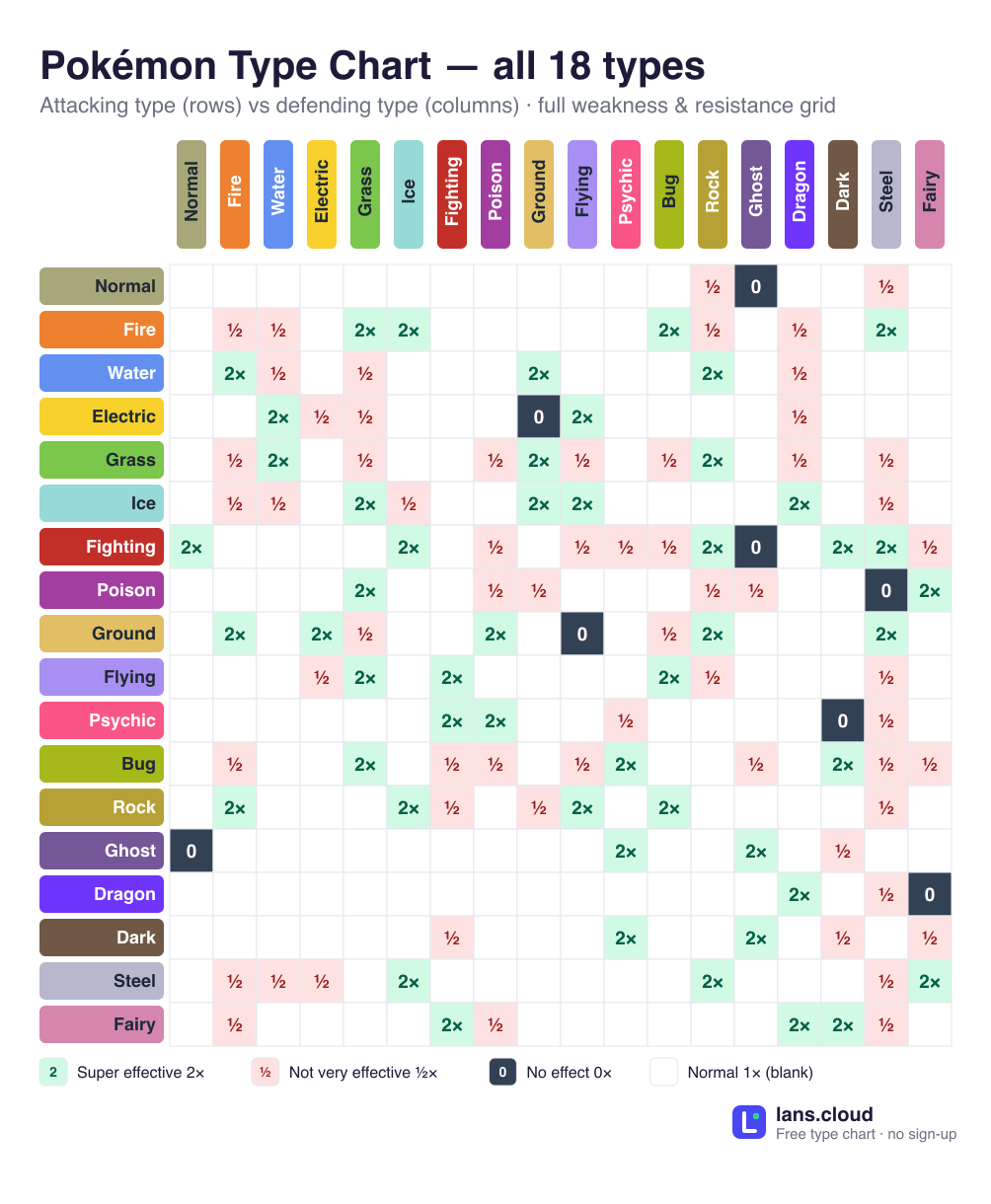
Here is the complete gen 6+ type chart as real, searchable HTML — every attacking type down the rows, every defending type across the columns, each cell computed by the same engine that powers this type chart calculator (never hand-typed). Read across a row to see everything that type hits or bounces off; a green 2 is super effective, a red ½ is resisted, a dark 0 is an immunity, and a blank cell is plain neutral damage.
A flat chart like this only shows single types, though — the moment a Pokémon has two types you have to multiply two columns together, which is exactly where 4× and ¼× come from. For any dual type spread, tap both types in the calculator above and it does that multiplication for you instantly.
The complete 18×18 type chart
2Super effective (2×)
½Not very effective (½×)
0No effect (0×)
Blank = neutral (1×)
Full Pokémon type chart, gen 6+ — attacking type (rows) vs defending type (columns), computed from the same engine as the calculator.
Atk ↓ / Def →
NOR
FIR
WAT
ELE
GRA
ICE
FIG
POI
GRO
FLY
PSY
BUG
ROC
GHO
DRA
DAR
STE
FAI
Normal
neutral, 1×
neutral, 1×
neutral, 1×
neutral, 1×
neutral, 1×
neutral, 1×
neutral, 1×
neutral, 1×
neutral, 1×
neutral, 1×
neutral, 1×
neutral, 1×
½
0
neutral, 1×
neutral, 1×
½
neutral, 1×
Fire
neutral, 1×
½
½
neutral, 1×
2
2
neutral, 1×
neutral, 1×
neutral, 1×
neutral, 1×
neutral, 1×
2
½
neutral, 1×
½
neutral, 1×
2
neutral, 1×
Water
neutral, 1×
2
½
neutral, 1×
½
neutral, 1×
neutral, 1×
neutral, 1×
2
neutral, 1×
neutral, 1×
neutral, 1×
2
neutral, 1×
½
neutral, 1×
neutral, 1×
neutral, 1×
Electric
neutral, 1×
neutral, 1×
2
½
½
neutral, 1×
neutral, 1×
neutral, 1×
0
2
neutral, 1×
neutral, 1×
neutral, 1×
neutral, 1×
½
neutral, 1×
neutral, 1×
neutral, 1×
Grass
neutral, 1×
½
2
neutral, 1×
½
neutral, 1×
neutral, 1×
½
2
½
neutral, 1×
½
2
neutral, 1×
½
neutral, 1×
½
neutral, 1×
Ice
neutral, 1×
½
½
neutral, 1×
2
½
neutral, 1×
neutral, 1×
2
2
neutral, 1×
neutral, 1×
neutral, 1×
neutral, 1×
2
neutral, 1×
½
neutral, 1×
Fighting
2
neutral, 1×
neutral, 1×
neutral, 1×
neutral, 1×
2
neutral, 1×
½
neutral, 1×
½
½
½
2
0
neutral, 1×
2
2
½
Poison
neutral, 1×
neutral, 1×
neutral, 1×
neutral, 1×
2
neutral, 1×
neutral, 1×
½
½
neutral, 1×
neutral, 1×
neutral, 1×
½
½
neutral, 1×
neutral, 1×
0
2
Ground
neutral, 1×
2
neutral, 1×
2
½
neutral, 1×
neutral, 1×
2
neutral, 1×
0
neutral, 1×
½
2
neutral, 1×
neutral, 1×
neutral, 1×
2
neutral, 1×
Flying
neutral, 1×
neutral, 1×
neutral, 1×
½
2
neutral, 1×
2
neutral, 1×
neutral, 1×
neutral, 1×
neutral, 1×
2
½
neutral, 1×
neutral, 1×
neutral, 1×
½
neutral, 1×
Psychic
neutral, 1×
neutral, 1×
neutral, 1×
neutral, 1×
neutral, 1×
neutral, 1×
2
2
neutral, 1×
neutral, 1×
½
neutral, 1×
neutral, 1×
neutral, 1×
neutral, 1×
0
½
neutral, 1×
Bug
neutral, 1×
½
neutral, 1×
neutral, 1×
2
neutral, 1×
½
½
neutral, 1×
½
2
neutral, 1×
neutral, 1×
½
neutral, 1×
2
½
½
Rock
neutral, 1×
2
neutral, 1×
neutral, 1×
neutral, 1×
2
½
neutral, 1×
½
2
neutral, 1×
2
neutral, 1×
neutral, 1×
neutral, 1×
neutral, 1×
½
neutral, 1×
Ghost
0
neutral, 1×
neutral, 1×
neutral, 1×
neutral, 1×
neutral, 1×
neutral, 1×
neutral, 1×
neutral, 1×
neutral, 1×
2
neutral, 1×
neutral, 1×
2
neutral, 1×
½
neutral, 1×
neutral, 1×
Dragon
neutral, 1×
neutral, 1×
neutral, 1×
neutral, 1×
neutral, 1×
neutral, 1×
neutral, 1×
neutral, 1×
neutral, 1×
neutral, 1×
neutral, 1×
neutral, 1×
neutral, 1×
neutral, 1×
2
neutral, 1×
½
0
Dark
neutral, 1×
neutral, 1×
neutral, 1×
neutral, 1×
neutral, 1×
neutral, 1×
½
neutral, 1×
neutral, 1×
neutral, 1×
2
neutral, 1×
neutral, 1×
2
neutral, 1×
½
neutral, 1×
½
Steel
neutral, 1×
½
½
½
neutral, 1×
2
neutral, 1×
neutral, 1×
neutral, 1×
neutral, 1×
neutral, 1×
neutral, 1×
2
neutral, 1×
neutral, 1×
neutral, 1×
½
2
Fairy
neutral, 1×
½
neutral, 1×
neutral, 1×
neutral, 1×
neutral, 1×
2
½
neutral, 1×
neutral, 1×
neutral, 1×
neutral, 1×
neutral, 1×
neutral, 1×
2
2
½
neutral, 1×
Read a row as an attacking type and each column as the defender it lands against — computed cell-by-cell from the calculator’s own effectiveness engine. A blank cell is neutral (1×) damage, the classic fan-chart convention. This flat chart shows single types only; for a dual type defender, multiply the two columns together (or just tap both types in the calculator above).
The full Pokémon type chart — save or print it. Attacking type down the side, defending across the top.Download PNG
Reading Matchups Like a Trainer
Team builders scan for shared weaknesses: three teammates all weak to Ground is how sweeps happen. Check each member’s defensive spread here, then look for a partner whose resists cover the gaps — the classic Fire/Water/Grass core exists because the three cover one another’s weaknesses almost perfectly. In battle, think in both directions: your Ghost move bouncing off a Normal type and their Fighting move bouncing off your Ghost are the same immunity rule working for and against you. And remember the chart is symmetric in structure but not in content — Steel resists Dragon, but Dragon doesn’t resist Steel.
The two defending types are checked separately and their multipliers are multiplied together. Ice is 2× against both Dragon and Flying, so a Dragon/Flying Pokémon like Dragonite takes 2 × 2 = 4× from Ice Beam. The same math produces ¼× resists (½ × ½) and lets an immunity (×0) cancel everything: Water/Ground takes nothing from Electric because Ground’s immunity zeroes the whole product.
What is super effective against Fairy types?
Poison and Steel moves hit Fairy for 2× damage. Fairy itself resists Fighting, Bug and Dark, and is completely immune to Dragon, which is why Fairy types wall the classic Dragon sweepers.
What is a 4x weakness?
A dual-type Pokémon whose both types are weak to the same attacking type takes 2 × 2 = 4× damage from it. Famous examples: Dragonite (Dragon/Flying) to Ice, Swampert (Water/Ground) to Grass, and Scizor (Bug/Steel) to Fire. The calculator lists the 4× bucket first because it decides more battles than any other line.
Do abilities like Levitate change type effectiveness?
Not on the type chart itself: abilities are a separate layer the games apply afterwards. Levitate makes Ground moves miss, Flash Fire absorbs Fire, Water Absorb heals from Water. This calculator computes the pure type chart (gen 6 and later), so factor abilities in on top.
How do I check my whole team’s weaknesses?
Switch to Team check mode, a full team weakness calculator: add up to six members (one or two types each) and it cross-references all of them. An attacking type is flagged as an UNCOVERED THREAT when at least one member is weak to it and no member resists or is immune to it. Neutral damage doesn’t count as an answer: a 4× weakness needs a real switch-in, which is exactly how competitive team builders audit a core.
How do I check my team’s offensive type coverage?
Team check mode computes it alongside the weakness audit: each member’s own types count as its STAB attacking types, and the coverage row shows how many members hit each of the 18 types super-effectively. Types nobody answers are flagged as offense gaps: Dragon and Electric are the classic ones, since only Ice/Dragon/Fairy hit Dragon and only Ground hits Electric. Real movesets widen coverage (a Water type with Ice Beam covers Dragon), so read a gap as "teach a coverage move here."
Does the calculator remember my team?
Yes: your team, mode, and selected types are saved in your own browser, so a half-built squad is still there when you come back. Nothing is uploaded and there is no sign-up; clearing your browser data resets it.
Where can I see the full 18-type chart?
It is right on this page: the complete gen 6+ 18×18 type chart, rendered as a table with every attacking type as a row and every defending type as a column. Each cell is computed from the same effectiveness engine as the calculator, so the chart can never drift from the tool. The flat chart covers single types; the calculator above handles the dual-type multiplication a static chart cannot show, which is where 4× and ¼× matchups actually come from.
What is Charizard weak to?
Charizard is Fire/Flying, so Rock hits it for 4×: both of its types are weak to Rock, which is why Stealth Rock strips half its health on entry. Water and Electric hit for 2×, and it is immune to Ground because Flying ignores it. The popular-Pokémon chart on this page lists the same computed spread for Garchomp, Tyranitar, Dragonite, Swampert and ten more; for anything not listed, tap its two types in the calculator above.
Which Pokémon type has the fewest weaknesses?
Among single types the floor is 1 weakness, held by Normal (weak only to Fighting, immune to Ghost) and Electric (weak only to Ground). No dual pairing does better: scoring all 171 typings puts the floor at 1 weakness there too, reached by Bug/Steel, Normal/Ghost, Water/Ground, Poison/Dark and Ghost/Dark. Getting under the floor takes an ability rather than a typing: Levitate on a pure Electric Pokémon cancels the Ground weakness outright, which is how the Eelektross line ends up taking super-effective damage from nothing at all.
Dragon/Flying computed in one tap: the 4× Ice weakness, every resist, and the Ground immunity.