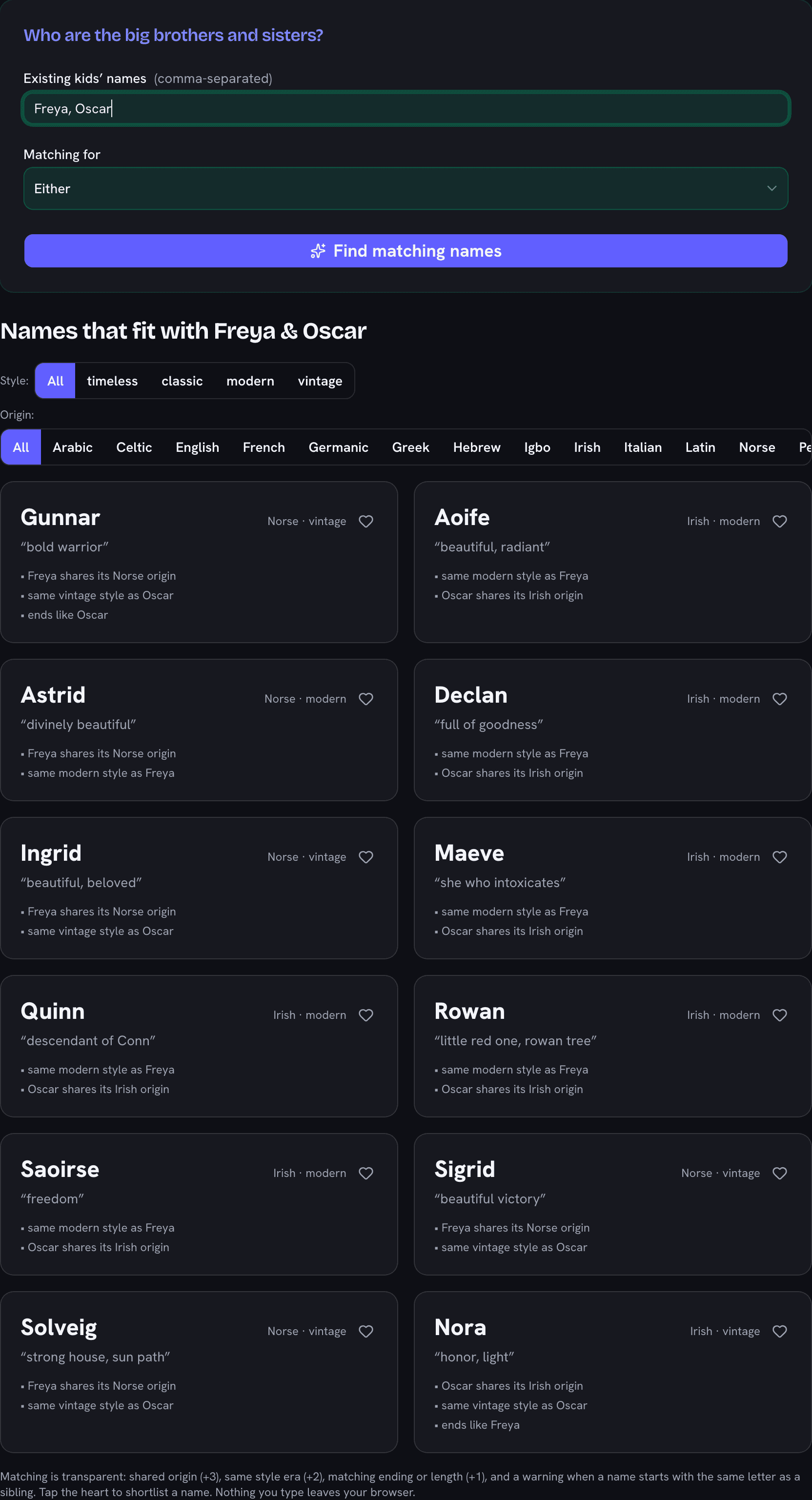
The Second Name Is Harder Than the First
The first baby got a blank canvas; the second gets a context. Suddenly every candidate is judged against the name you already chose — too matchy, not matchy enough, great alone but odd in the pair. This matcher makes that judgment explicit: enter the existing names and it scores the whole pool on shared origin, matching style era, and compatible sound, then shows the reason for every suggestion. You stay the judge; it just organizes the evidence.
Transparent by Design
No black-box “AI matching” here — the rules are on the table. Shared origin counts most, because a Freya-and-Astrid or a David-and-Naomi pairing carries its logic audibly. Same style era counts next: names revive in waves, and two names from the same wave sound like a family. Endings and length add polish, and same first initials earn a gentle warning about mixed-up mail and monograms. When your existing names aren’t in the 320-name pool, the sound rules still work on their own.
How the Score Ranks a Match
Every suggestion earns a number, and the list is sorted by it — so pick order is never arbitrary. Shared origin adds the most (+3), because a shared root is the strongest audible link between two names. A matching style era adds +2, a shared ending letter or length band adds +1 each, and a first initial that clashes with an existing sibling subtracts 2. A candidate that shares both origin and era with your names therefore clears the field before sound even enters the tally, which is why the worked examples below lead with same-origin, same-era picks. Ties break alphabetically, so the same inputs always rank the same way — the ordering is fully reproducible, not a fresh shuffle each visit.
From Shortlist to Winner
The matcher typically leaves you with a handful of favorites — which is exactly what the baby name elimination game is for: feed your finalists in and let keep-or-cut plus a bracket settle it. Both tools run entirely in your browser, so the family naming debate stays in the family.