lans.cloud

Escape Room Cipher Generator

Free escape room cipher generator: type secret messages, pick a cipher and hint level per clue, and print ready-to-hide clue cards plus a game-master answer key — all encoded in your browser.

Was this tool helpful?
Support this site

From Secret Message to Hidden Card in a Minute

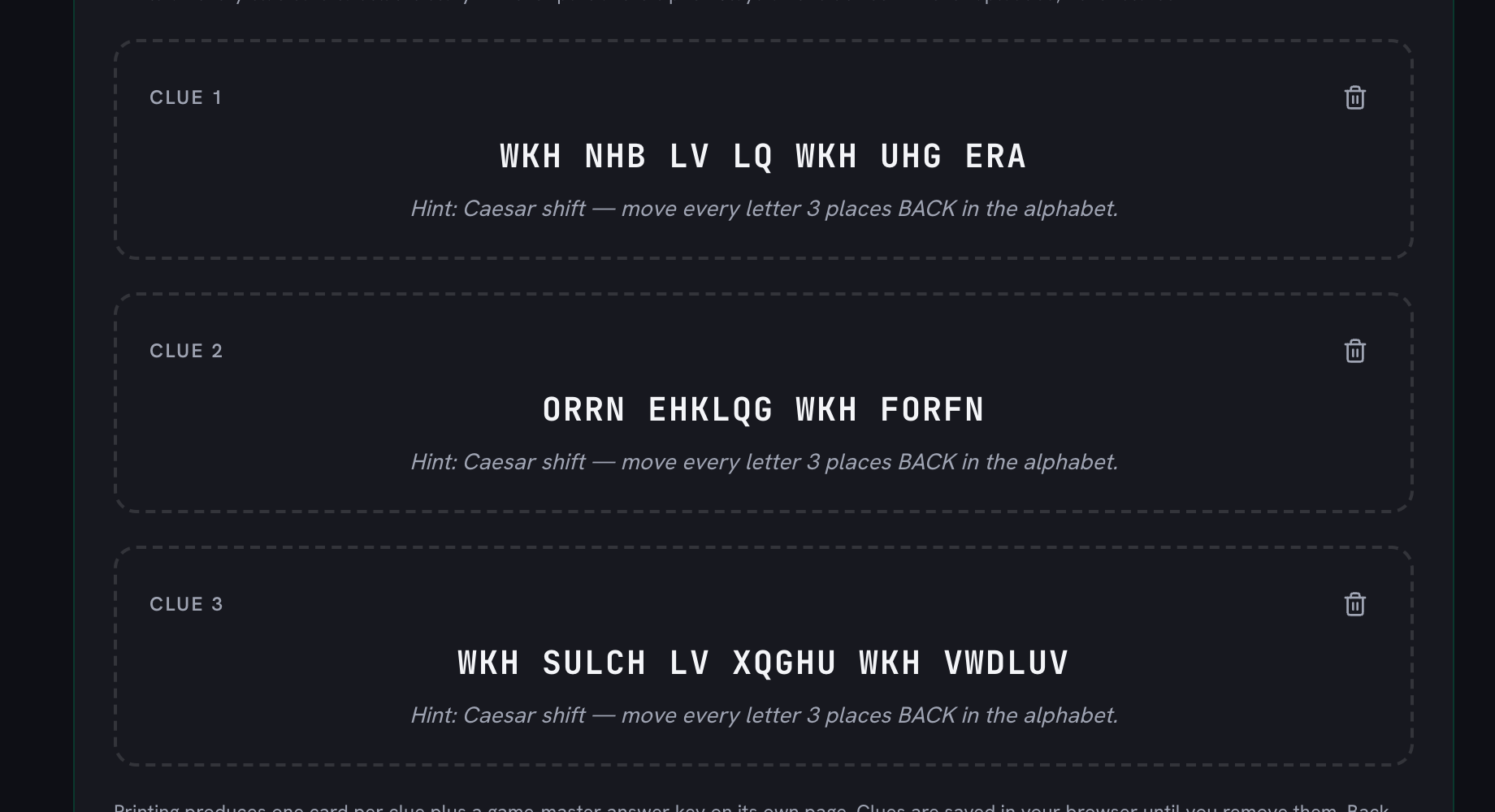
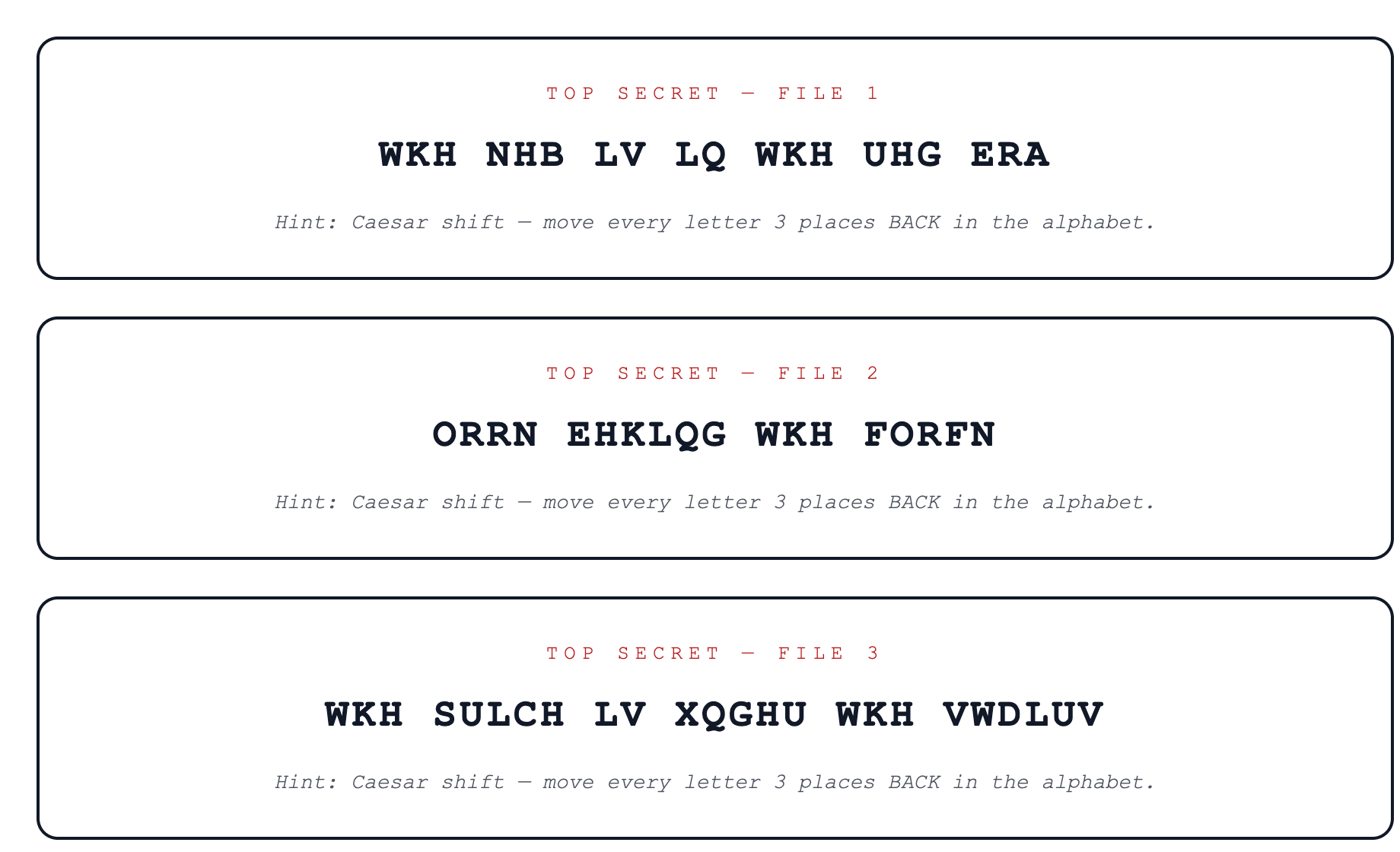
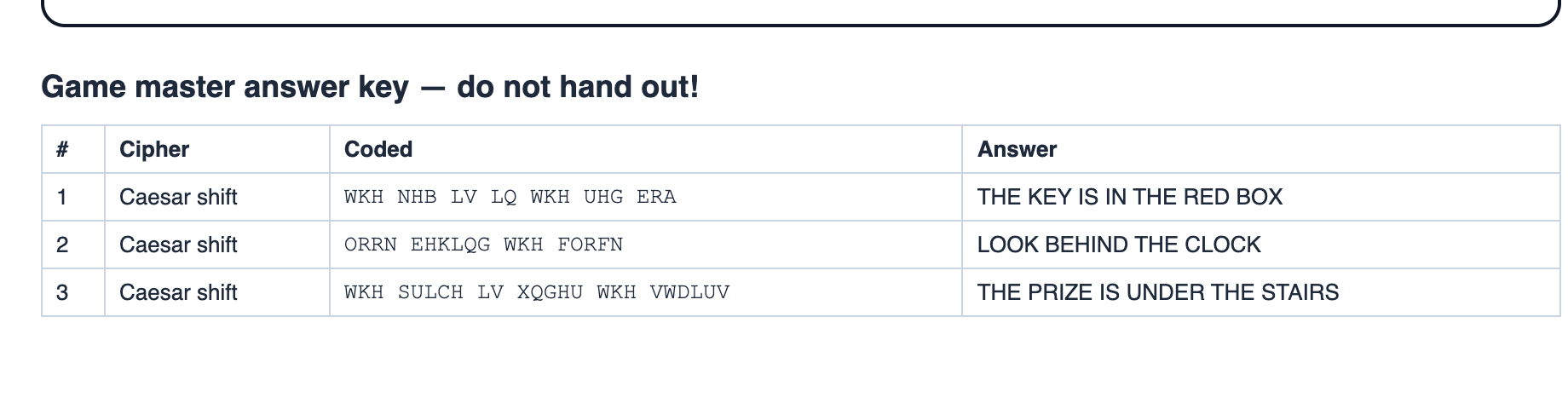
Every escape room, classroom breakout, and birthday treasure hunt runs on the same fuel: little pieces of paper with coded messages on them. Making those used to mean an evening with a cipher wheel and a pen. Here it is one line per clue: type the message players should discover, pick how hard the code should be, choose how much help the card gives, and add it to the stack. Print produces clean, cut-out-ready cards with a dashed border — and a game-master answer key on its own page, so you can rescue a stuck team without decoding your own puzzle live.

Difficulty Is a Design Choice

The same message can be a warm-up or a wall depending on the cipher and the hint. The table below pairs each cipher with an age band and a hint recommendation — the golden rule is that players should be delighted to crack a code, never defeated by it. Chain five to seven clues where each decoded message names the hiding place of the next card, and mix difficulties so the group keeps moving. For the classroom, pair it with the countdown timer on the projector and the scoreboard for competing teams.

Learn the Codes, Then Break Them

The companion cipher encoder & decoder shows every letter of every transformation step by step — perfect as a teaching station before the game, or as the “decoder room” in a tech-allowed hunt. Everything on both pages runs in your browser: the secret messages never leave your device, which means nobody can spoil game day by peeking at a server.
Cipher difficulty guide for games

CipherAge bandRecommended hint level
A1Z26 (numbers)Age 6+Full hint — counting through the alphabet is the whole puzzle
Caesar shiftAge 8+Full hint for younger kids; name-only from ~10
ROT13Age 9+Name-only — one fact to figure out, then it cracks fast
AtbashAge 9+Full hint first time, name-only after
Morse codeAge 9+Full hint + a printed Morse chart as a prop
Keyword substitutionAge 12+Full hint (the keyword is essential)
VigenèreTeens/adultsFull hint with the key word — hard even then, and satisfying

Bands assume no prior code-breaking experience. The hint level is set per clue card, so one hunt can mix difficulties.

Frequently Asked Questions

How do I make cipher clues for an escape room?

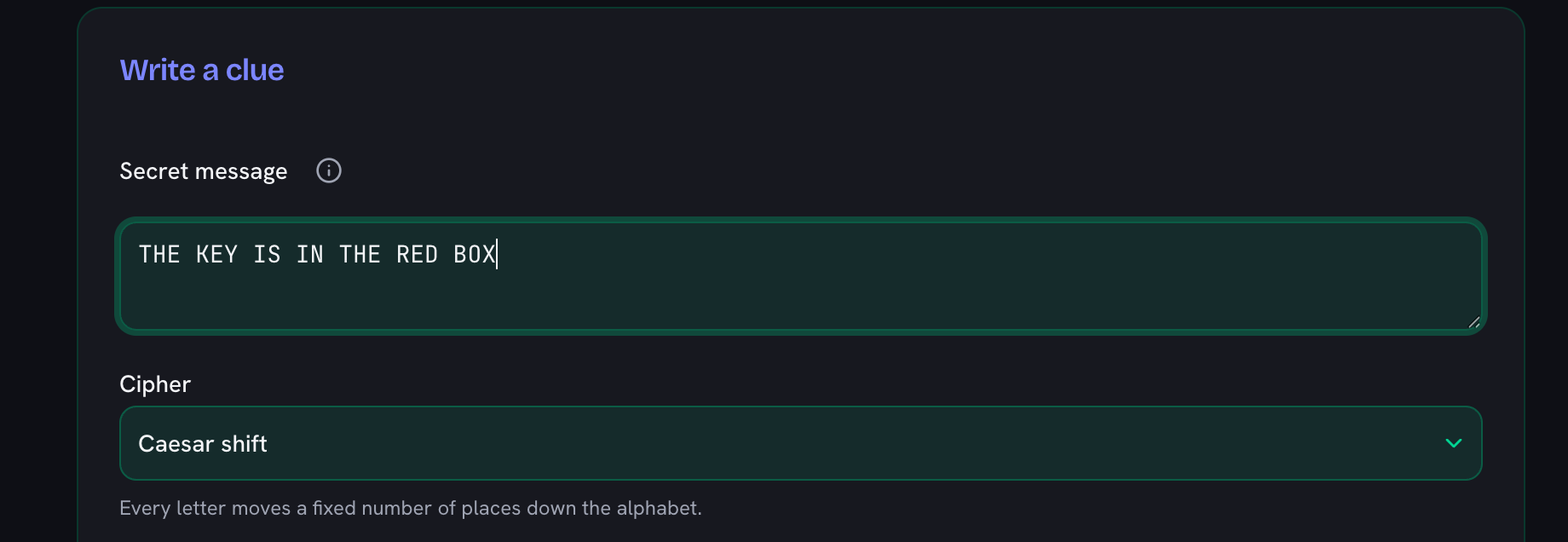
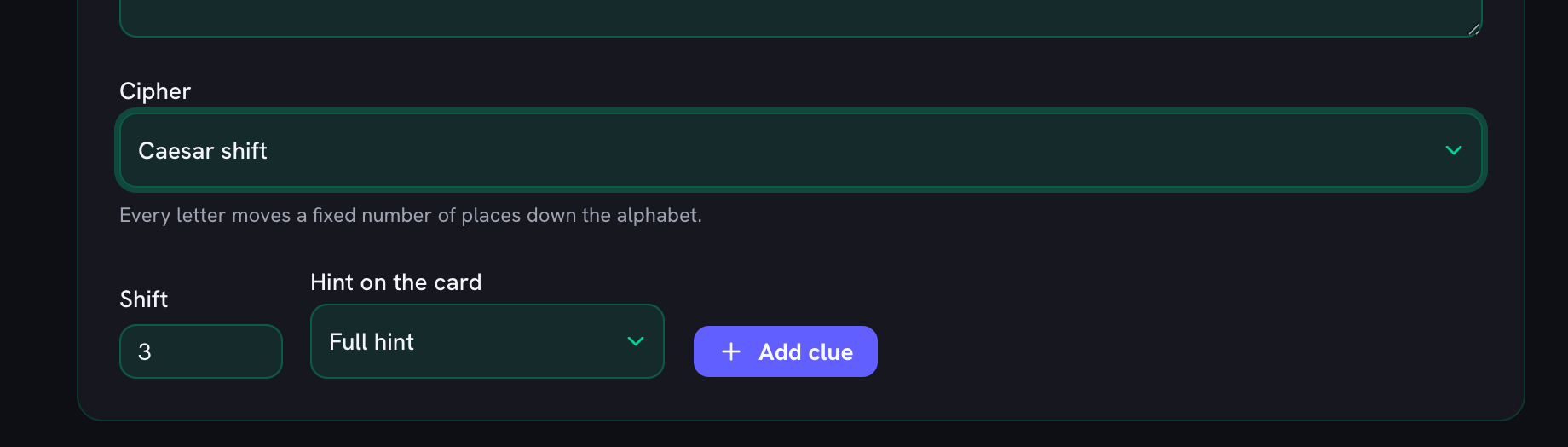
Type what the players should discover ("THE KEY IS IN THE RED BOX"), pick a cipher and a hint level, and add it as a clue card. Repeat for each station of your game, then print — you get one card per clue and a separate game-master answer key. Hide the cards, run the game.

Which cipher difficulty should I pick for kids?

The difficulty table on this page is the cheat sheet: A1Z26 numbers from about age 6, Caesar with a full hint from 8, Atbash and Morse (with a chart) from 9–10, and Vigenère only for teens or adults who enjoy a real fight. When in doubt, include the full hint — the fun is cracking the code, not being stuck.

Can players decode the clues without a computer?

Yes — that is the point of the hint levels. A full hint contains everything needed to decode by hand on paper. For Morse, print a Morse chart or leave one lying around as a prop. Players who want to check themselves can use the companion cipher decoder, which shows every step.

Are my secret messages uploaded anywhere?

No — clues are encoded in your browser and saved only on your device, so the answers can’t leak before game day. The print view is generated locally too.

What makes a good escape room clue chain?

Each decoded message should point to a physical place where the next card hides ("LOOK UNDER THE PLANT"), ending at the prize. Five to seven clues fits a 30–45 minute game; mix an easy cipher after a hard one to keep momentum, and give teams the room code sheet only when they are truly stuck.

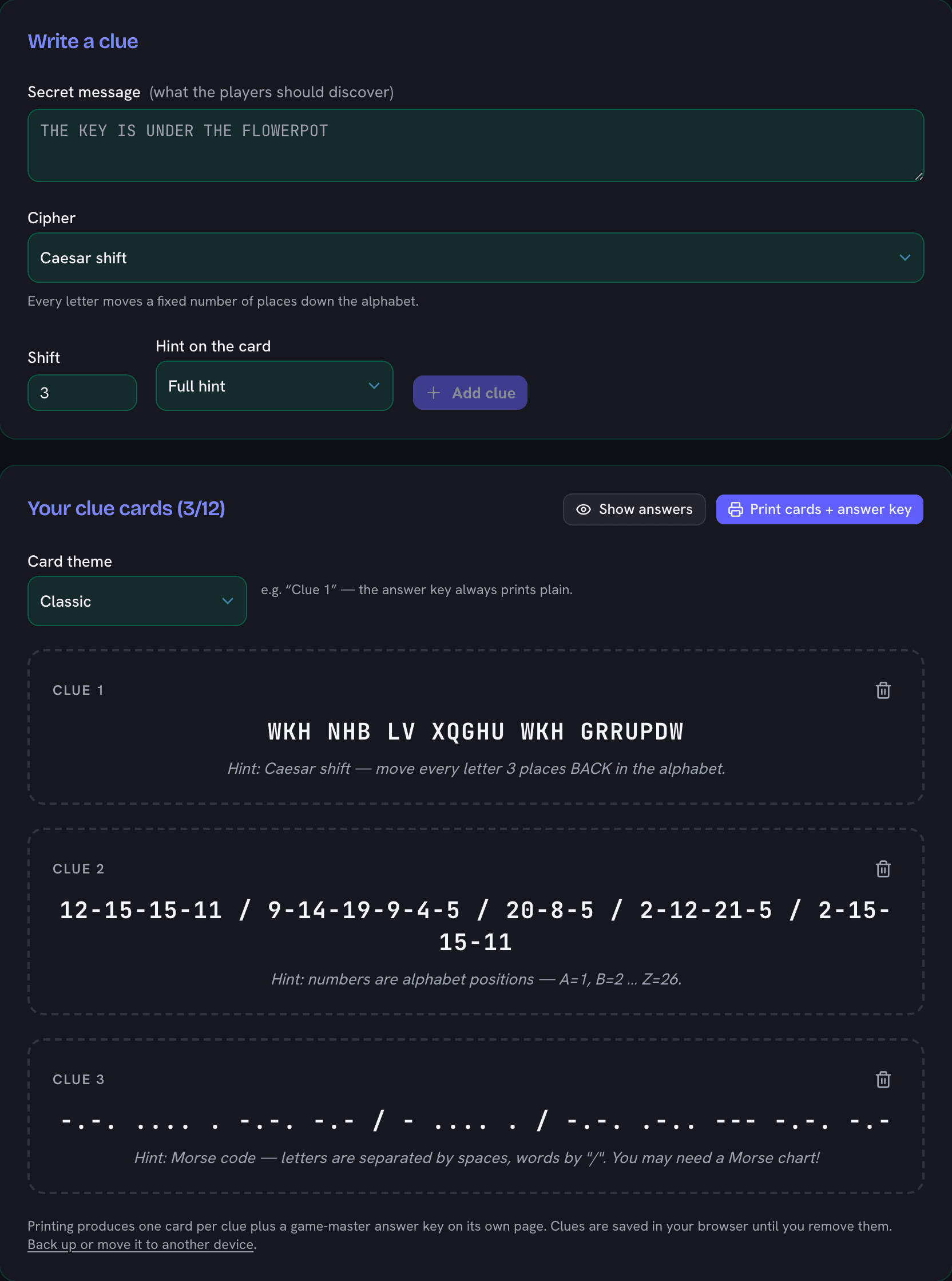
Escape room cipher generator with three clue cards in Caesar, number, and Morse codes, each with its hint line
Three stations of a hunt, three different codes — print produces cut-out cards plus the game-master answer key.