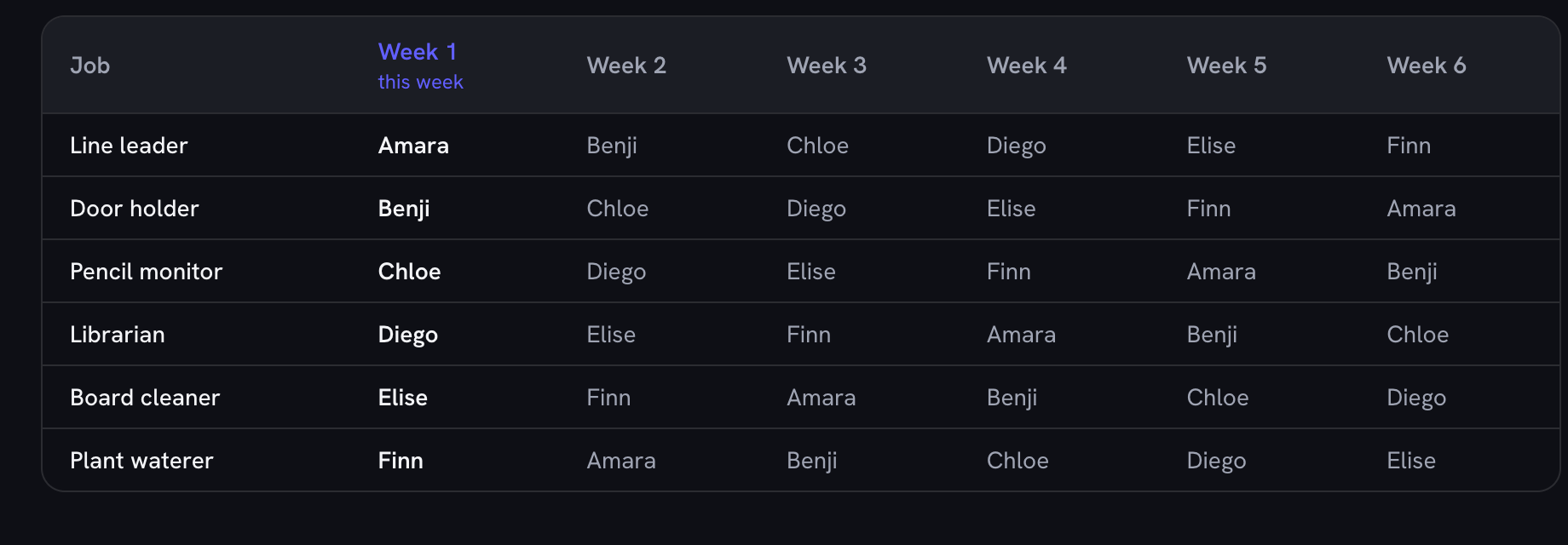

The Chart That Ends “It’s Not My Turn”
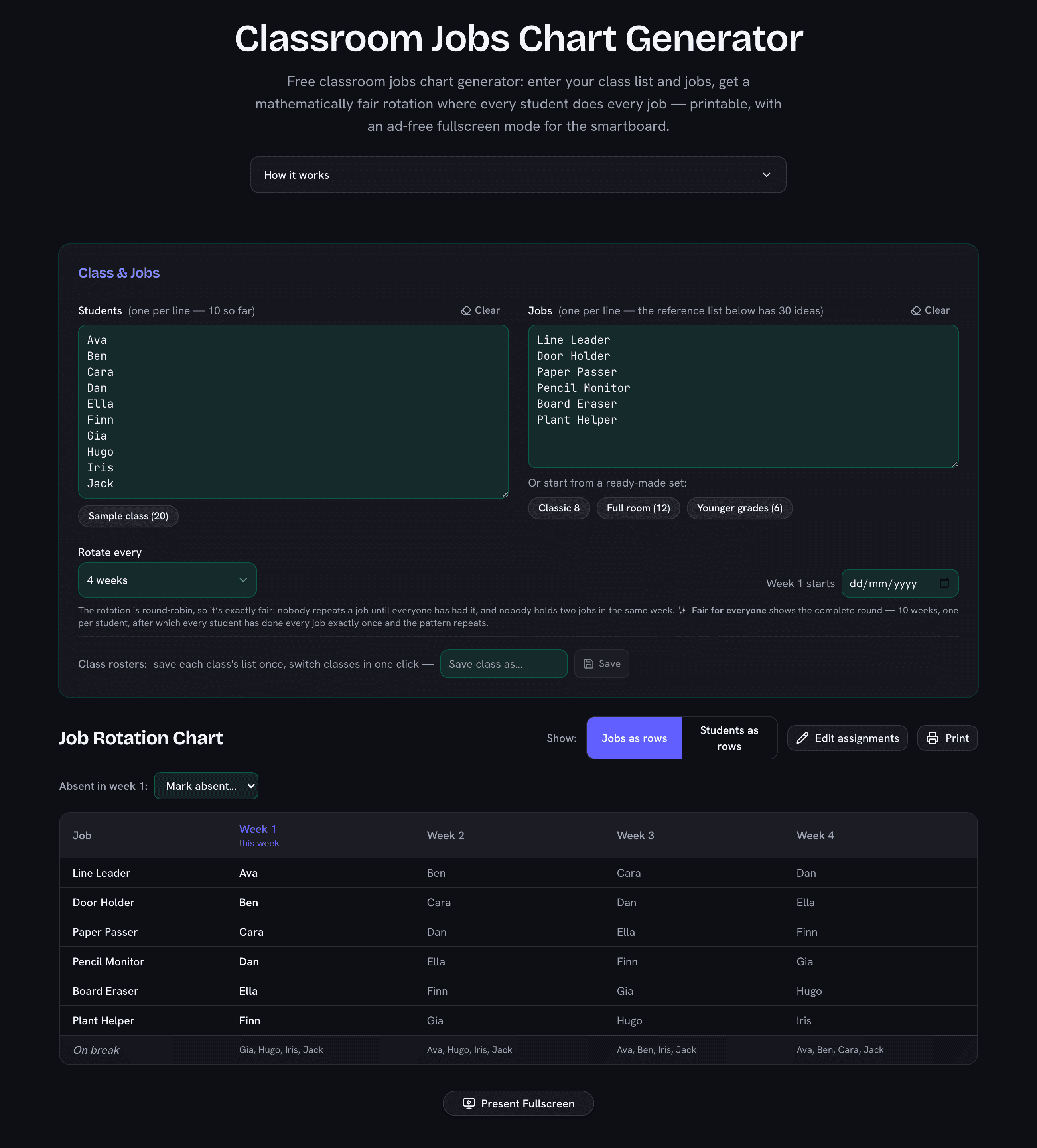
A classroom jobs chart does two things at once: it distributes the small work that keeps a room running, and it teaches responsibility — but only if students believe the rotation is fair. Hand-rotating name cards every Monday morning works until the week you forget, and the same child ends up line leader twice while another waits a month. This generator does the rotation with arithmetic instead of memory: every week, every job slides one student down your roster. Nobody repeats a job until the whole class has had it, and nobody works two jobs in the same week.
Set It Up Once in September
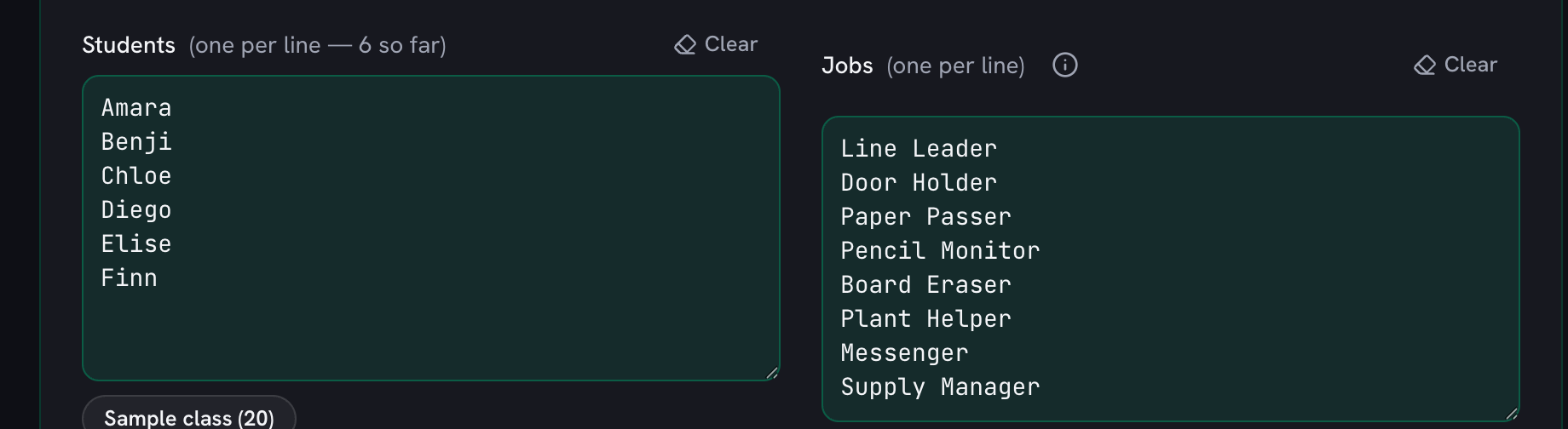
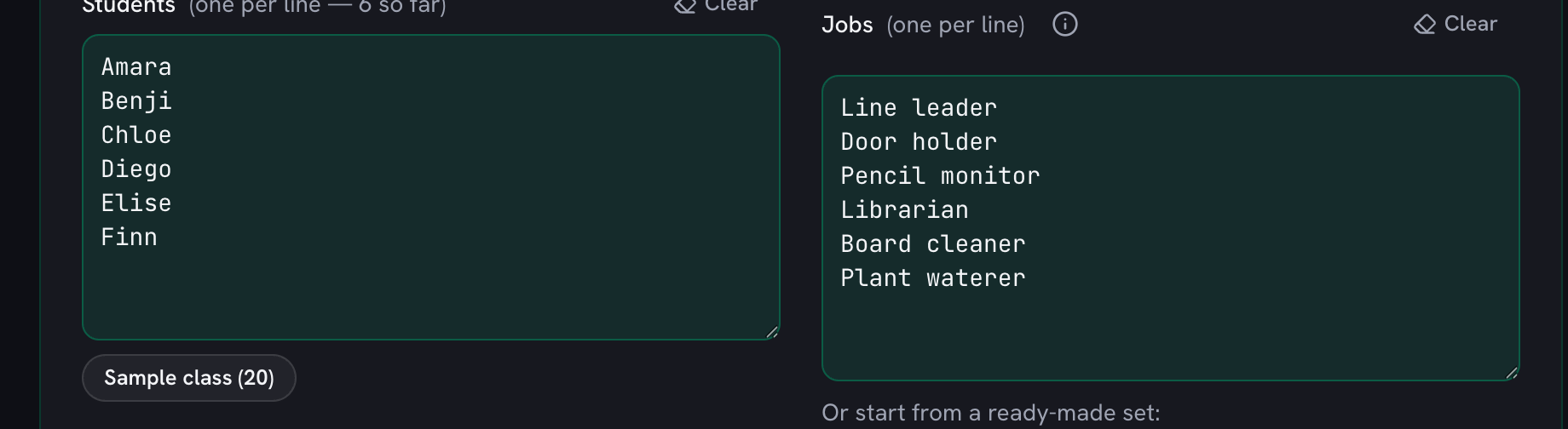
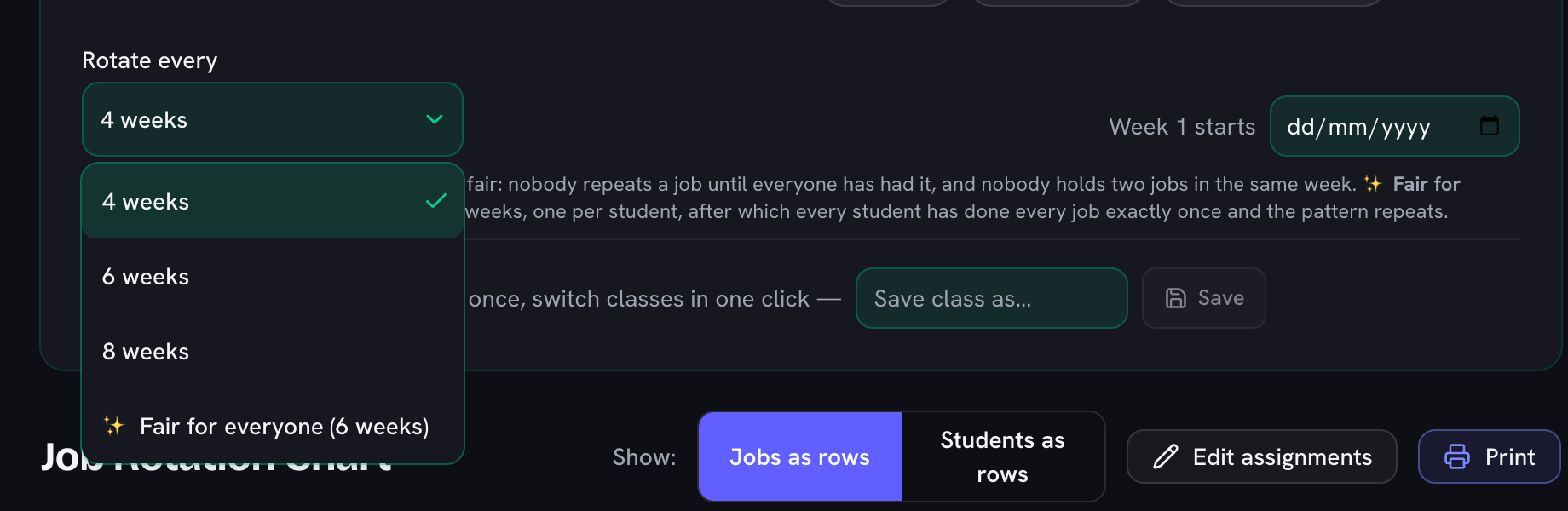
Paste your class list, keep or edit the starter jobs (the full reference list below has thirty ideas with duties and grade bands), and pick how many weeks to show — four for a monthly wall chart, or the ✨ fair-for-everyone view — the complete round — so every student sees exactly when each job comes to them. Print it for the wall, or put it on the smartboard in the ad-free fullscreen mode during Monday morning meeting; this week’s column is highlighted. Your roster never leaves the browser, and it stays saved on your device for the next time you open the page.
Make It Part of the Routine
Teachers who keep job charts alive all year tend to do three things: rotate weekly (monthly rotations make jobs feel like chores), keep the job count around six to ten so turns come often, and let the chart — not the teacher — be the authority when someone asks whose turn it is. Pair it with the classroom timer for cleanup sprints and the seating chart generator when the new rotation calls for a new arrangement.